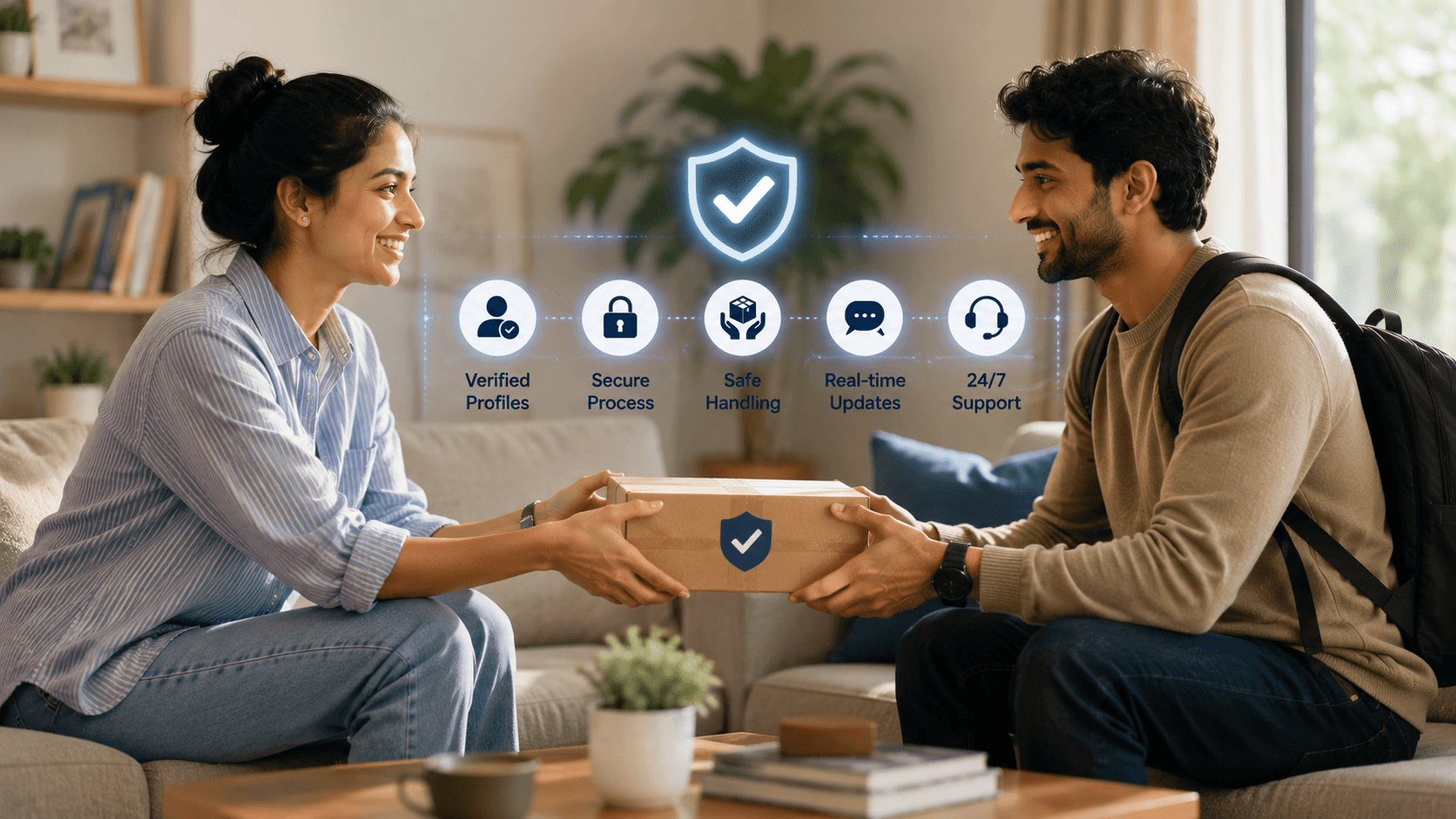
One of the first questions people ask when they hear about traveller-powered delivery is:
"Is it safe?"
It's a fair question.
After all, you're either trusting someone to carry your parcel internationally or agreeing to carry an item on behalf of someone else.
The reality is that traveller-powered delivery isn't a new concept. For decades, people have relied on friends, relatives, colleagues, and acquaintances travelling abroad to carry documents, gifts, medicines, and personal items.
What has changed is that technology now helps make these interactions more structured, transparent, and secure.
Why Safety Matters
International deliveries involve trust from both sides.
Senders want confidence that their parcel will reach its destination.
Travellers want assurance that they are carrying legitimate, permitted items.
A successful traveller-powered network depends on creating safeguards for both.
What Creates Trust in Traveller Delivery?
Identity Verification
Knowing who you're interacting with is the first step.
Verification processes help establish accountability and reduce the chances of misuse.
Transparency
Both parties should have clear visibility into:
- Who is sending the parcel
- Who is carrying it
- What is being transported
- Where it is going
The more transparent the process, the stronger the trust.
Restricted Item Policies
Not everything should be carried.
Traveller-powered delivery is generally best suited for small, travel-friendly items such as:
- Documents
- Books
- Clothing
- Personal items
- Prescribed medicines (where permitted)
Items such as electronics, currency, precious metals, and prohibited goods should never be accepted unless explicitly allowed by platform policies and local regulations.
Clear Communication
Misunderstandings often arise when expectations aren't clear.
Before any handover, both parties should agree on:
- Parcel contents
- Pickup arrangements
- Delivery expectations
- Timelines
Tips for Senders
If you're sending an item internationally:
- Be honest about the contents
- Package the item securely
- Share accurate contact details
- Follow customs regulations
- Avoid sending restricted items
Transparency protects everyone involved.
Tips for Travellers
If you're carrying an item:
- Know exactly what you're carrying
- Inspect the parcel before accepting it
- Ask questions if anything seems unclear
- Never carry prohibited or suspicious items
- Follow airline and customs regulations
If something doesn't feel right, decline the request.
Why Many People Prefer This Model
Traveller-powered delivery works because it mirrors a behavior that already exists.
People naturally trust those travelling between countries to help move small items for family and friends.
Technology simply adds an extra layer of organization, visibility, and accountability to that process.
Final Thoughts
No delivery method is completely risk-free.
However, traveller-powered delivery can be a safe and effective option when supported by verification, transparency, clear policies, and responsible behaviour from both senders and travellers.
The key principle is simple:
Only send or carry items that you fully understand and are comfortable with.
When trust and transparency come first, traveller-powered delivery can create a reliable way to move small items across borders.